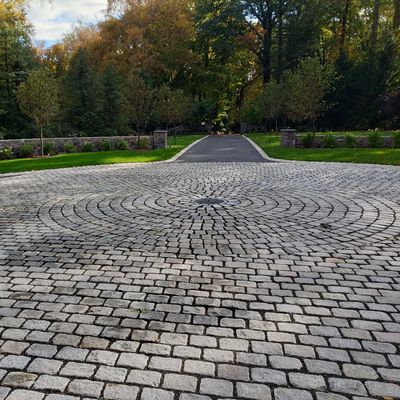
What Is Belgian Block?
Belgian block — also called cobblestone or granite paving block — is a hand-cut or machine-cut stone cube that has been used in road and courtyard construction for centuries. Today it is experiencing a major resurgence in residential and commercial landscaping across New York and Connecticut, prized for its timeless aesthetic, incredible durability, and the unique character it brings to any property.
Unlike poured concrete or asphalt, Belgian block is a natural material that actually looks better as it ages. The slightly irregular texture, rich color variation from grey to tan to warm gold, and the classic look are impossible to replicate artificially.
Top Belgian Block Design Ideas
1. Driveway Apron & Border
The most popular application is using Belgian block as a border or apron along the edges of an asphalt or concrete driveway. This combination is both practical and beautiful — the stone border prevents the asphalt edges from crumbling under traffic, and it creates a clean, defined, premium look that instantly boosts curb appeal. A two-to-three-course border is the most common choice.
2. Full Belgian Block Driveway
For those who want maximum impact and longevity, a completely Belgian block-paved driveway is the gold standard. A properly installed Belgian block driveway, set in a reinforced concrete base, can easily last 100+ years. Many historic New York streets still have their original Belgian block intact from the late 1800s.

A complete Belgian block installation creates a timeless, premium driveway.
3. Walkway & Garden Path
Belgian block makes an outstanding material for garden paths, front entry walkways, and side yard paths. Laid in a running bond or fan pattern with small gaps of decomposed granite or ground cover between them, they create an inviting path that blends naturally with landscaping.
4. Patio & Courtyard
A Belgian block patio provides a sense of old-world elegance that no other material can match. Pair it with a pergola, surrounding garden beds, and outdoor lighting, and you have a premium outdoor living space that will be the envy of the neighborhood.
5. Retaining Curbs & Channel Drains
Belgian block is frequently used to create driveway curbs that slope water into a central drain channel, protecting the yard from runoff. The curbs are functional, attractive, and highly durable against snow plows and heavy vehicle traffic.
Installation Tip
The foundation matters most. All Belgian block must be set in a reinforced concrete footing — never just sand or gravel — to prevent heaving, sinking, or loosening over time. This is the difference between a 100-year installation and one that shifts after the first winter.
Why Belgian Block Adds Property Value
Real estate professionals consistently find that high-quality masonry upgrades, including Belgian block driveways and walkways, deliver a strong return on investment. Buyers in competitive markets in Westchester, Greenwich, and the surrounding areas view premium stonework as a sign of quality throughout a property and are willing to pay a premium for it.
Beyond resale value, Belgian block eliminates recurring maintenance costs. Unlike asphalt or concrete that need regular sealing, patching, or full replacement every 15-20 years, a properly installed Belgian block surface is essentially maintenance-free. Individual blocks that crack or shift can be lifted, releveled, and reset without affecting the surrounding area.
Ready to transform your property with Belgian block? Get a free design consultation today!